Stable Hardwood That Resists Seasonal Movement
Engineered Flooring in Mahopac for spaces where humidity and temperature change throughout the year
Richard Hardwood Flooring and Renovation installs engineered hardwood flooring in homes and commercial interiors where solid wood might crack, cup, or separate due to moisture fluctuations. You need the appearance of natural wood without the risk of boards warping when basements run damp in spring or when heating systems dry the air in winter. Engineered flooring uses a multi-layer construction that allows the wood to expand and contract without compromising the surface.
The installation begins with subfloor preparation to ensure the surface is clean, level, and dry. Engineered planks consist of a hardwood veneer bonded to multiple layers of plywood or high-density fiberboard, which provides dimensional stability. The planks can be glued, nailed, or floated depending on the subfloor type and the specific product chosen. This flexibility allows installation over concrete slabs, existing vinyl, or wood subfloors without extensive demolition.
If your current floors show gaps between boards during certain seasons or if you are considering hardwood in a below-grade space, a consultation will clarify whether engineered flooring suits your conditions.
How the Flooring Performs After It Settles
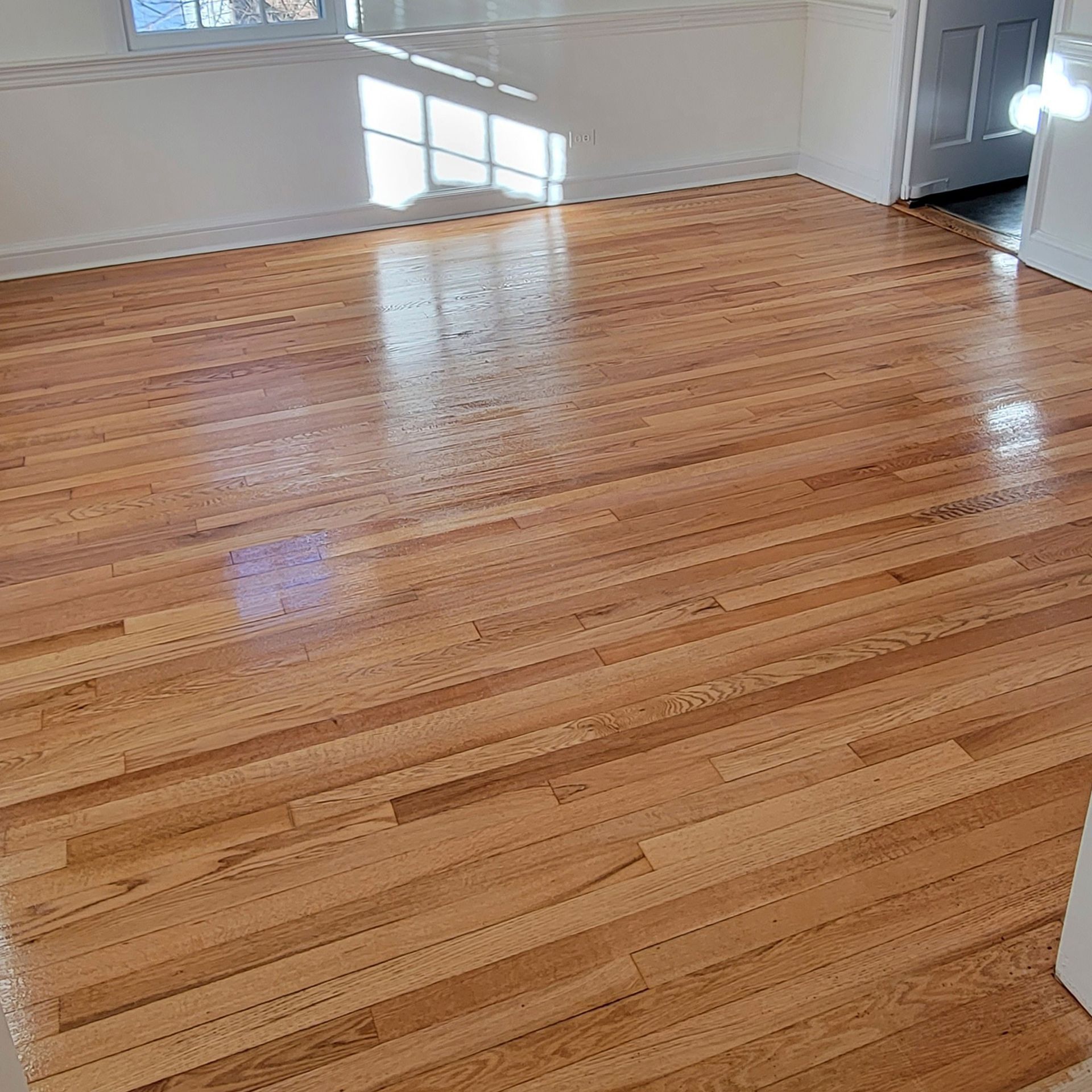
You will see a wood surface that looks identical to solid hardwood but remains stable when indoor humidity shifts. Planks stay tight against each other without the seasonal gapping that occurs with solid boards, and the surface does not develop the cupping or crowning that indicates moisture-related movement. The finish layer resists scratches and wear in the same way solid wood does, and the grain patterns match across the installation.
Richard Hardwood Flooring and Renovation aligns planks so that seams stagger naturally, avoiding repeating patterns or clusters of short pieces that interrupt the visual flow. You will notice that transitions between rooms sit flush and that the floor feels solid underfoot, without the hollow sound that sometimes accompanies poorly installed floating floors. The engineered construction allows installation in rooms where solid hardwood would fail, including finished basements and spaces built over crawl spaces prone to dampness.
Installation includes acclimating the material to the indoor environment before securing it, which reduces the risk of post-installation movement. The work does not include custom staining on site, as most engineered products arrive pre-finished. Repairs to subfloor joists or moisture barrier installation are handled separately unless included in the project scope during the estimate.
Common Questions About Engineered Hardwood
Clients often want to know how engineered flooring compares to solid wood and what limitations apply during installation.
What prevents engineered flooring from cupping in humid conditions?
The cross-grain construction of the plywood or fiberboard layers counteracts the natural tendency of wood to expand and contract with moisture changes, keeping the surface flat.
How many times can you refinish engineered hardwood?
Refinishing depends on the thickness of the top veneer, which typically ranges from two to six millimeters, allowing one to three sandings over the floor's lifetime.
Why choose engineered flooring over solid hardwood in Mahopac homes?
Engineered flooring handles the seasonal humidity swings common in the region without the gapping or warping that solid wood may develop in less stable environments.
What subfloor types work best for engineered hardwood installation?
Concrete slabs, plywood, and OSB subfloors all accept engineered planks as long as they are level, dry, and structurally sound.
When does floating installation make sense instead of gluing or nailing?
Floating installation works well over existing hard surfaces or radiant heat systems, where nails or adhesive could cause damage or interfere with heat transfer.
Richard Hardwood Flooring and Renovation offers free consultations to evaluate your space and recommend the right plank thickness, wood species, and installation method. If you want hardwood floors that stay flat and tight regardless of the season, reach out to discuss your specific conditions and layout.