Bringing Worn Wood Back to Use
Flooring Restoration in Mahopac for existing hardwood showing scratches, fading, or surface damage
Richard Hardwood Flooring and Renovation restores hardwood floors that have aged past the point where cleaning or simple refinishing will improve their appearance. You have flooring that still has structural integrity but looks tired, with scratches that catch light, finish worn through to bare wood in high-traffic paths, or discoloration from sun exposure and spills. Restoration combines sanding, repairs, and refinishing to return the floor to a usable state without replacing it entirely.
The process starts with inspecting the floor for loose boards, damaged planks, and subfloor issues that need attention before surface work begins. Sanding removes the old finish and surface layer of wood, leveling the floor and eliminating scratches, stains, and uneven wear. The depth of sanding depends on how much material remains and how deep the damage penetrates. After sanding, the raw wood is sealed with stain if desired and finished with multiple coats of polyurethane or oil-based finish to protect against future wear.
If your hardwood floors look dull, feel rough underfoot, or show visible damage in the areas you use most, a consultation will determine whether restoration is practical or whether replacement makes more sense.
What Changes After Restoration
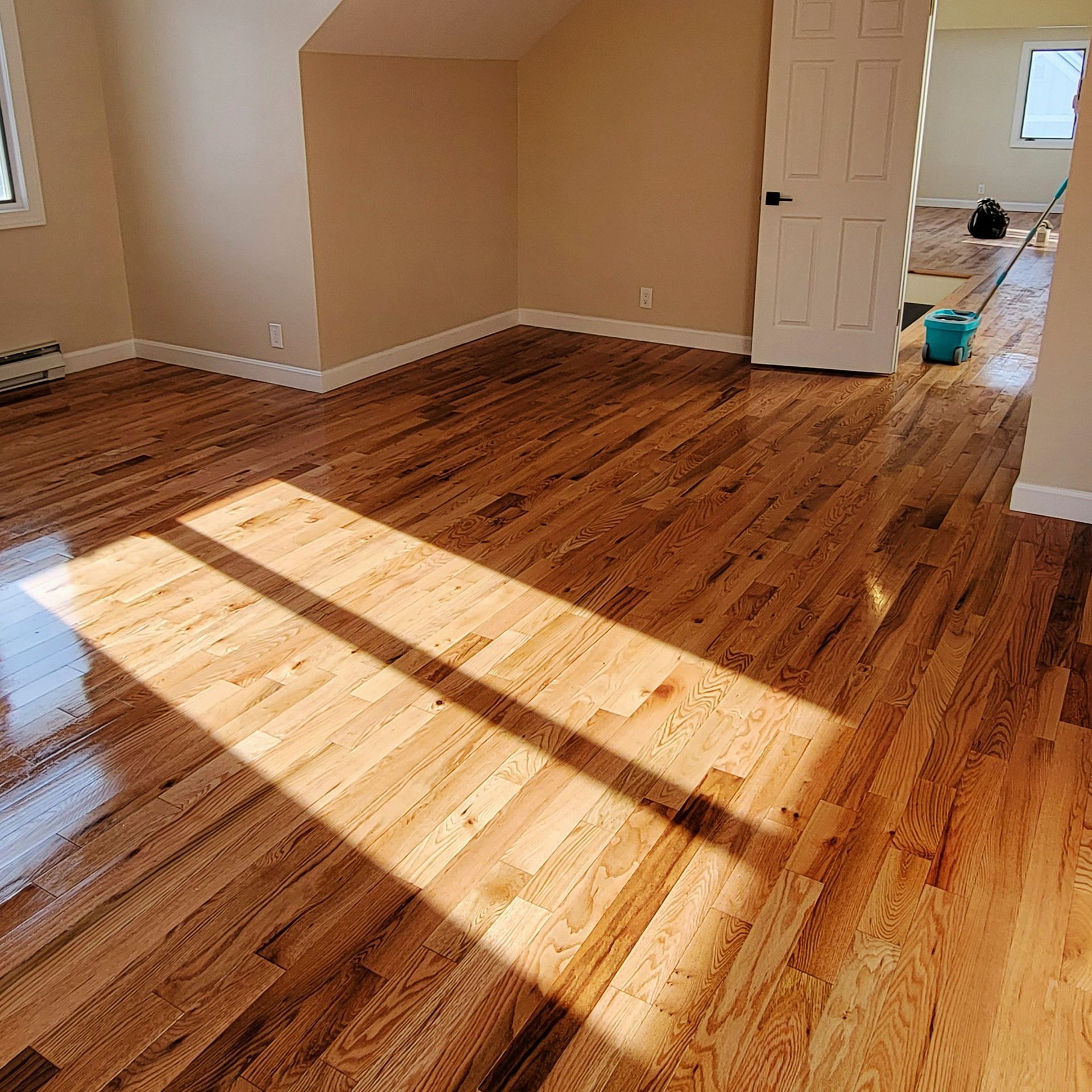
You will walk across a smooth surface that reflects light evenly and looks clean without the streaks, dullness, or worn patches that marked the floor before. The wood grain becomes visible again, and the color appears consistent across the room rather than fading near windows or darkening in corners. The finish feels hard and slightly glossy or matte depending on the product chosen, and the floor resists new scratches better than the degraded finish it replaces.
Richard Hardwood Flooring and Renovation addresses gaps between boards by filling them where appropriate, and replaces planks that are cracked, cupped, or too damaged to sand flat. You will notice that the floor sits level without dips or high spots, and that the finish coats build a protective layer that keeps dirt and moisture from penetrating the wood. The restoration process removes years of accumulated grime embedded in the grain, leaving the wood looking closer to its original state.
Work includes moving furniture out of the work area and protecting adjacent rooms from dust, though some fine dust will escape despite containment efforts. The process does not include replacing baseboards, painting walls, or repairing drywall, and furniture is returned once the final finish coat has cured. Drying time between coats and full curing can take several days, during which foot traffic should be limited.
Common Restoration Questions
Homeowners often ask how restoration compares to replacement and what the process involves in practical terms.
What condition makes hardwood floors good candidates for restoration instead of replacement?
Floors with solid planks that are still securely fastened and have enough thickness to sand can usually be restored, while floors with extensive rot, insect damage, or severe cupping may need replacement.
How much wood does sanding remove from the floor surface?
Most sanding jobs remove between one-sixteenth and one-eighth of an inch of wood, depending on the depth of scratches and the flatness of the floor.
Why does refinished hardwood sometimes look different in color than before?
Sanding exposes fresh wood that may be lighter or darker than the aged surface, and stain selection changes the final color significantly.
When should you replace individual planks before refinishing the entire floor in Mahopac homes?
Planks with splits, water damage, or deep gouges that sanding cannot remove should be replaced before refinishing begins to ensure a uniform surface.
What finish type holds up best in high-traffic areas?
Water-based polyurethane dries quickly and resists yellowing, while oil-based polyurethane builds a harder surface that withstands heavy use over longer periods.
Richard Hardwood Flooring and Renovation provides free estimates that include an assessment of your floor's condition and recommendations for repairs, stain options, and finish types. If your hardwood floors need more than cleaning but less than replacement, reach out to discuss restoration options that fit your timeline and budget.