Preserving Character in Aging Wood Floors
Historic Flooring Renovation in Mahopac for older homes with original hardwood showing structural wear or finish failure
Richard Hardwood Flooring and Renovation restores historic hardwood floors in heritage properties where replacement would erase original craftsmanship and architectural detail. You face flooring that has held up for decades but now shows deep scratches, worn finish, loose boards, or water damage that threatens the wood's integrity. Historic renovation focuses on repairing and preserving what remains rather than installing modern materials that do not match the period or construction methods of the home.
The work begins with a detailed assessment of board condition, subfloor stability, and the extent of damage from moisture, pests, or structural settling. Loose planks are re-nailed or re-glued using techniques that match the original installation method, which may involve cut nails, blind nailing, or face nailing depending on the floor's age. Damaged sections are repaired by splicing in reclaimed wood of similar species, grain, and thickness, ensuring the patches blend with surrounding boards. Finish removal uses methods appropriate to the wood's age and condition, avoiding aggressive sanding that would remove too much material from already thin planks.
If your home was built before 1950 and still has its original floors, a consultation will determine whether full restoration is feasible or whether selective repairs and refinishing will suffice.
How Restored Floors Look and Perform
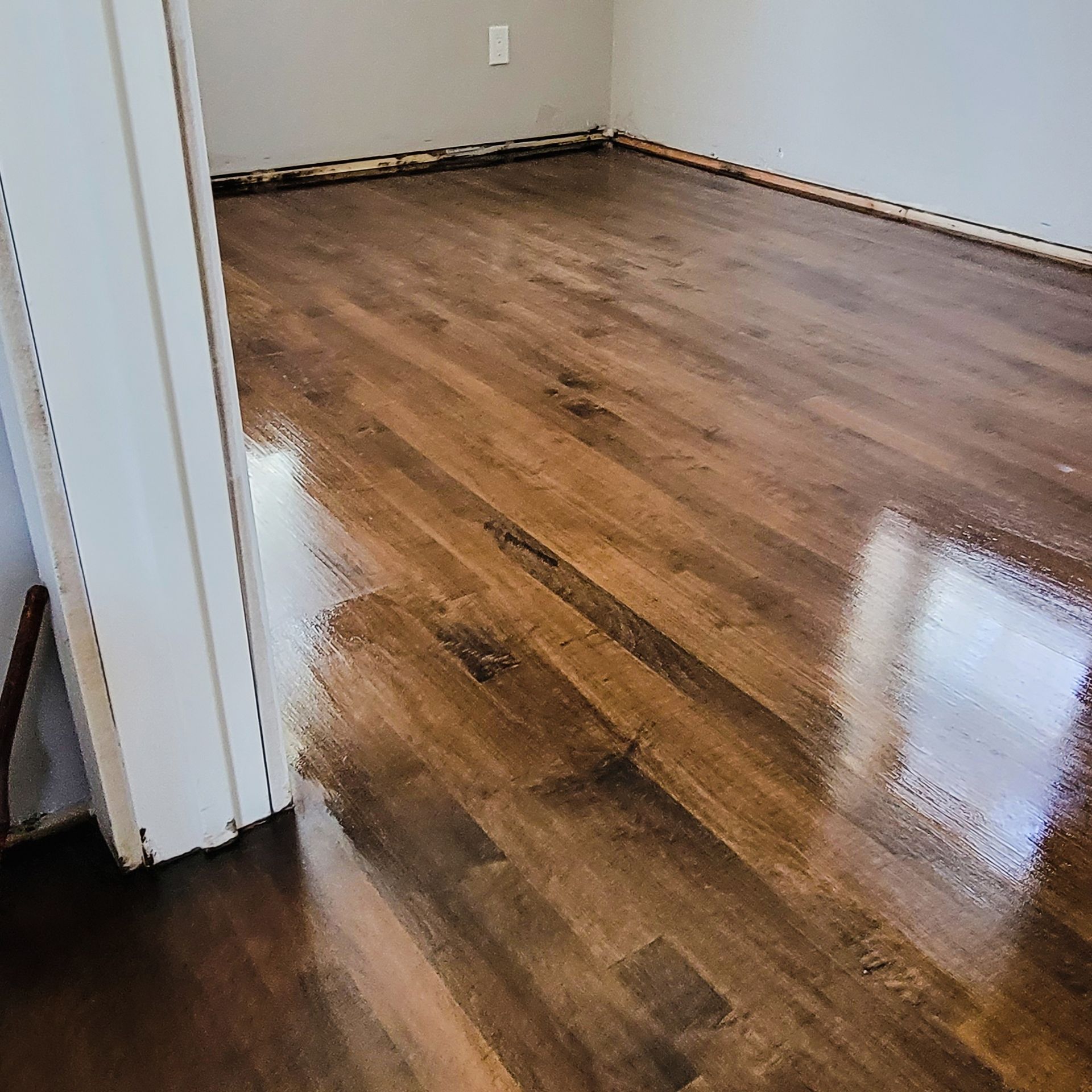
You will see flooring that retains its original width, nail patterns, and surface character while looking clean and structurally sound. The finish brings out the wood's natural color without obscuring the patina that develops over decades, and the surface feels smooth without eliminating subtle texture or hand-planed marks that indicate age. Boards sit level and secure, eliminating the creaks and movement that signal failing fasteners or subfloor deterioration.
Richard Hardwood Flooring and Renovation matches repair wood to the existing floor as closely as possible, using reclaimed or salvaged material when available to maintain authenticity. You will notice that patched areas blend into the surrounding floor once the finish is applied, and that the overall appearance respects the home's period rather than introducing modern uniformity. The restoration process stabilizes the flooring without altering its historic character, so the floor continues to reflect the building's original construction.
Work includes repairing subfloor damage where boards have rotted or separated, and addressing moisture sources that may have contributed to the deterioration. The process does not include installing radiant heat systems beneath historic floors or replacing entire sections with new hardwood unless the original material is beyond salvage. Finish selection considers historical accuracy and practical durability, balancing period-appropriate appearance with modern wear resistance.
Questions About Restoring Historic Floors
Owners of older homes often ask how much original material can be saved and what methods protect the floor's historic integrity.
What determines whether a historic floor can be restored or needs replacement?
The thickness of remaining wood, the extent of structural damage, and the availability of matching repair material all influence whether restoration is practical or whether sections must be rebuilt.
How do you match new wood to floors that are over a century old?
Reclaimed wood from buildings of similar age and region often provides the closest match in grain, color, and milling profile, though exact matches are rare and some variation is expected.
Why avoid modern sanding equipment on very old floors?
Drum sanders remove material quickly and can sand through thin wear layers on floors that have been refinished multiple times, so hand scraping or light buffing is often safer.
When should you replace individual boards instead of refinishing the entire floor?
Boards with rot, insect damage, or cracks that extend through the thickness should be replaced before refinishing, as sanding will not address structural issues.
What historic flooring challenges are common in Mahopac-area homes?
Homes built in the late 1800s and early 1900s often have narrow pine or chestnut floors with hand-cut nails and irregular milling, which require careful handling during restoration to avoid splintering or further damage.
Richard Hardwood Flooring and Renovation offers free consultations to assess the condition of historic floors and outline what restoration will involve. If you want to preserve the original flooring in a heritage property, contact us to evaluate your floors and discuss repair options that honor the building's history.